AI Bot Tracking: How to Verify AI Crawler Hits
AI bot tracking finds and verifies AI crawler visits in your logs. We round-tripped every vendor IP list: which work, and which have not moved in a year.
 Published Last updated 11 minute read
On this page 11 sections
- What is AI bot tracking?
- Where does AI bot activity show up in logs and analytics?
- Which AI bots should you look for in your logs?
- How do you verify an AI bot is genuine?
- Which AI vendors publish a usable IP list?
- What are the limits of AI bot IP verification?
- How do you set up AI bot tracking from your server log?
- What do AI crawler numbers tell you?
- What should you do with AI bot tracking data?
- How does RankX AI track AI bot activity?
- Use crawler logs to find product retrieval failures
Short answer: AI bot tracking means finding AI crawler visits in your server or CDN logs and verifying each one against the vendor's published IP ranges, because the user agent is only a claim. Record the bot, its purpose, the URL and the response status. A crawler visit shows a page was fetched; it is not a human visit, a citation or proof of buyer demand.
What is AI bot tracking?
AI bot tracking is the practice of finding and verifying AI crawler visits in your own request logs. The verifying is what separates it from ordinary bot reporting. Each crawler announces itself with a documented token in the user agent header, and that token is a claim, not a credential.
The question AI bot tracking answers is narrow. An assistant can only cite a page it has read, so before asking why a brand is missing from AI answers, establish whether the crawlers arrived at all. A site nobody crawls has a technical problem, not a content one.
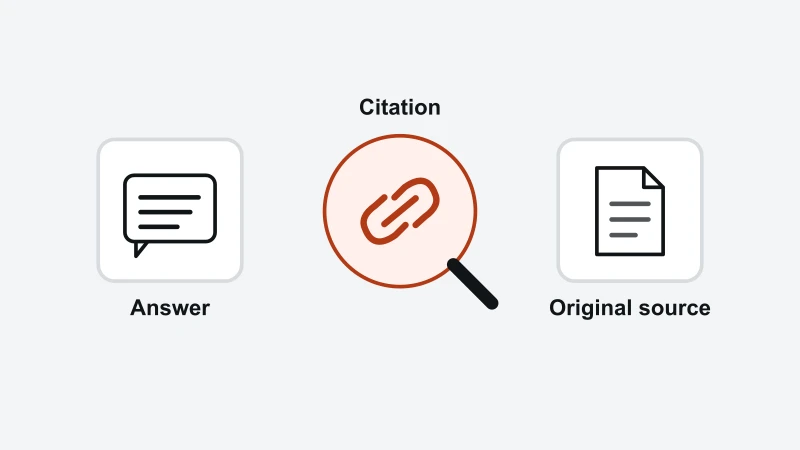
Bot activity is one input to a larger measurement of how AI platforms see you. Crawl activity tells you a page was fetched, and whether it was then cited or named in an answer is a separate reading. The measurement framework in full shows how the two fit together.
Where does AI bot activity show up in logs and analytics?
AI bot activity appears in server and CDN request logs, and almost nowhere else. Every AI crawler visit is an HTTP request, so it lands in the access log of whatever serves the response: your origin, your CDN, or both.
- Server or edge log
Records requests to the site.
- Browser analytics
Depends on its collection mechanism.
- AI answer
Requires separate evidence of what was generated.
Crawler requests, human sessions and answer citations are not equivalent counts.
Where you look | Does it show AI crawler visits? | Why |
|---|---|---|
Origin server access log | Yes | Every request is logged server-side, with user agent and client IP |
CDN logs, such as Cloudflare or Amazon CloudFront | Yes | The edge sees the request first, including ones it refuses |
Google Analytics 4 or another tag-based analytics platform | No | The tag needs JavaScript, and these crawlers run none |
Search Console | Googlebot only | Its crawl stats cover Google's own crawlers |
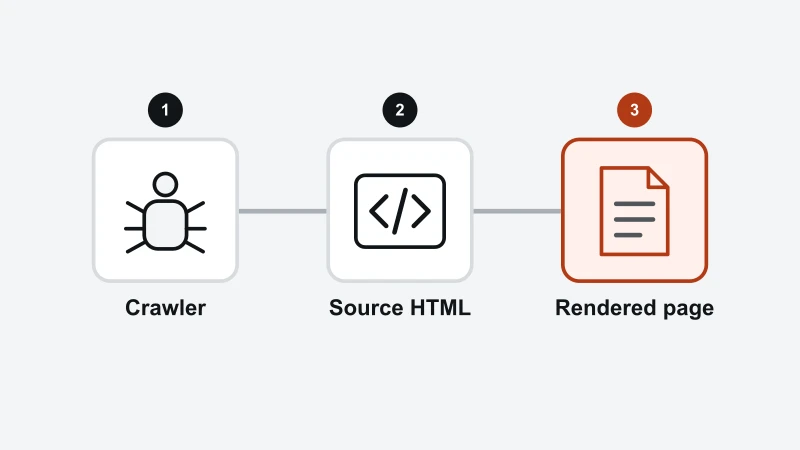
Google Analytics 4 does not record these visits, and the reason is structural, not a setup mistake. GA4 fires when a JavaScript tag executes in a rendered page. GPTBot, ClaudeBot and PerplexityBot fetch the HTML and leave without running scripts, so no analytics dashboard built on a client-side tag can see them arrive.
How is traffic from AI chatbots different from crawler traffic?
AI chatbot traffic is people clicking a link in an answer from ChatGPT, Claude, Gemini or Perplexity, while crawler traffic is the bot visits that fetched the page. GA4 records the human visits that arrive with a referrer or a tag, and tracking AI referral traffic in GA4 covers that analytics integration. Neither metric stands in for the other.
The measurement behind the no-JavaScript claim
The evidence that these bots skip JavaScript comes mainly from one study, and many pages repeating it leave the date off. Vercel and MERJ analysed their network traffic (opens in a new tab) and published on 17 December 2024: 569 million GPTBot fetches, 370 million from Claude and 24.4 million from PerplexityBot.
GPTBot requested JavaScript files on 11.50 percent of requests and ClaudeBot on 23.84 percent, and neither executed them. The study is now 22 months old, and no AI vendor has documented adding JavaScript rendering to a crawler since. It stands as the best available evidence, not a current measurement.
Googlebot and Applebot are the documented exceptions: Google renders pages, and Apple says Applebot may render them in a browser. Content that appears only after a script runs is its own problem, covered in how AI crawlers read your site.
Which AI bots should you look for in your logs?
Look for the documented tokens, grouped by what each bot is for. A training bot collects pages that may train a future AI model, a search bot builds the index an assistant answers from, and a user-fetch agent retrieves one page because a person asked about it.
Token | Vendor | Purpose | Honours robots.txt |
|---|---|---|---|
GPTBot | OpenAI | Training | Yes |
OAI-SearchBot | OpenAI | Search index | Yes |
ChatGPT-User | OpenAI | User fetch | May ignore |
ClaudeBot | Anthropic | Training | Yes |
Claude-SearchBot | Anthropic | Search index | Yes |
Claude-User | Anthropic | User fetch | Yes |
PerplexityBot | Perplexity | Search index | Yes |
Perplexity-User | Perplexity | User fetch | May ignore |
Amazonbot | Amazon | Training and products | Yes |
Applebot | Apple | Search index, may also train | Yes |
CCBot | Common Crawl | Training | Yes |
meta-externalagent | Meta | Training | Yes |
Bytespider | ByteDance | Training | No official statement |
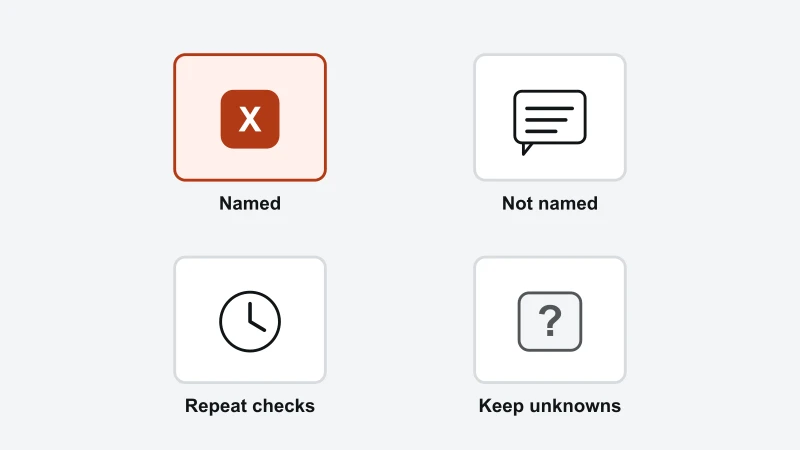
Two tokens in wide circulation never appear in a log file. Google-Extended and Applebot-Extended are control tokens: they exist so a site can state a training preference in robots.txt, and nothing fetches under either name. Zero visits from Google-Extended is the expected result.
Googlebot belongs on your list too. Google AI Overviews and AI Mode are served from Google's Search index, so no separate AI crawler fetches pages for them, and robots.txt rules for Googlebot are the control. Ordinary SEO crawling and AI Overviews arrive on the same Googlebot user agent, so you cannot separate the AI visit from the classic one in the log.
Search bots deserve attention first. Blocking OAI-SearchBot removes a site from ChatGPT's search results, while blocking a training bot changes nothing about whether an assistant can cite you today. You can check which bots can reach you without reading a log at all.
How do you verify an AI bot is genuine?
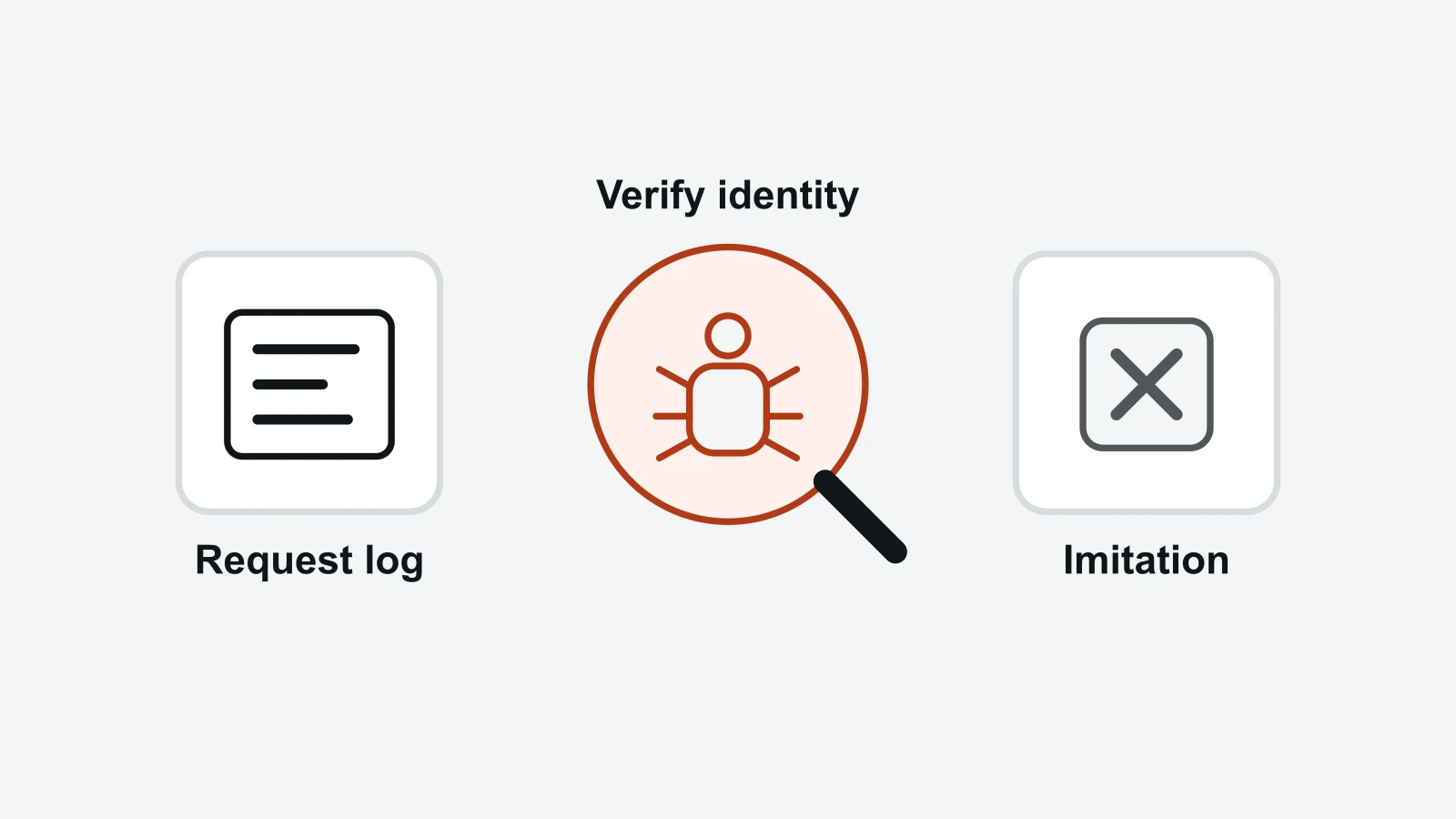
Verify an AI bot by its source IP address, because the user agent is a header the client chooses. Anyone can send a request announcing itself as GPTBot. Unverified user agent counts are the most common defect in AI bot tracking, inflated by scrapers and security scanners wearing a borrowed name.
- Claim
Read the user-agent value.
- Evidence
Use the vendor-supported verification method.
- Verdict
Keep unverified requests distinct.
A familiar user-agent string can be imitated.
Two verification methods are documented. Most AI vendors publish a JSON file of the IP ranges their crawlers use, and you check the request's source address against it.
Google also documents a reverse DNS check in Google's own verification guide (opens in a new tab). Resolve the IP to a hostname, confirm it ends in a Google domain, then resolve that hostname forward and confirm it returns the same address.
OpenAI's crawler documentation (opens in a new tab) gives a separate JSON endpoint for each of GPTBot, OAI-SearchBot and ChatGPT-User. It offers no reverse DNS alternative, so the published list is the whole verification path for those three.
Which AI vendors publish a usable IP list?
Six AI vendors publish machine-readable IP lists across ten endpoints, and they differ enough that the advice to verify against them needs qualifying. We fetched every documented endpoint in our crawler roster on 6 September 2026, counted prefixes by address family and recorded each file's own timestamp.
Bot | Ranges published | Includes IPv6 | File last stamped |
|---|---|---|---|
GPTBot | 21 | No | 30 Oct 2025 |
OAI-SearchBot | 35 | No | 2 Jan 2026 |
ChatGPT-User | 207 | No | 4 Sep 2026 |
Claude (all three bots) | 26 | No | 18 Aug 2026 |
PerplexityBot | 8 | No | 7 Feb 2025 |
Perplexity-User | 4 | No | 17 Oct 2025 |
Applebot | 33 | No | 31 Jul 2026 |
MistralAI-Index | 2 | No | 19 Apr 2026 |
MistralAI-User | 4 | No | 19 Feb 2025 |
DuckAssistBot | 486 | No | 1 Sep 2026 |
Googlebot | 317 | Yes, 147 of them | 4 Sep 2026 |
Every AI vendor list except Google's is IPv4 only
All ten AI vendor endpoints published IPv4 ranges and nothing else. Google was the only publisher carrying IPv6: 147 of Googlebot's 317 prefixes, and 136 of the 272 in its special-crawlers file.
If your origin answers over IPv6 and a request claims to be GPTBot from an IPv6 address, the published list cannot settle it. No vendor states whether its list is exhaustive, and OpenAI's documentation does not mention IPv6.
So record those requests as a third outcome, separate from verified and rejected. Filing them as fake undercounts real bot visits, and filing them as genuine trusts the header you set out to check.
The lists age at very different rates
Freshness across the ten endpoints spans nineteen months. PerplexityBot's file was stamped 7 February 2025 and MistralAI-User's 19 February 2025, while ChatGPT-User's was stamped two days before we read it. A failed match against an old file is weaker evidence of spoofing than a failure against a recent one.
The size range is just as wide, from 2 prefixes for MistralAI-Index to 486 for DuckAssistBot and 1,058 in Google's user-triggered fetchers file. OpenAI publishes 207 ranges for ChatGPT-User against 21 for GPTBot, while Perplexity publishes 4 for its user agent and 8 for its crawler.
From RankX AICheck the access half of the crawler question.Compare one failed product with an accessible product on the same template.Use the crawler access checkerWhat are the limits of AI bot IP verification?
Two limits constrain IP verification whatever tooling you build on it. Both come from what the vendors publish, not from your setup.
Anthropic publishes one list for all three Claude bots. The file at claude.com/crawling/bots.json holds 26 bare IPv4 prefixes with no per-bot labels, so an address can confirm a request came from Anthropic but cannot tell ClaudeBot from Claude-SearchBot or Claude-User.
Amazon documents three URLs for its bots, and all three serve HTML pages rather than JSON, which is why Amazon sits outside the table above. ByteDance and xAI publish no verification data at all, so Bytespider and Grok traffic cannot be verified by either method.
How do you set up AI bot tracking from your server log?
Set up AI bot tracking in four steps, none of which needs an analytics platform: collect the logs, filter, verify and store. Where each step happens depends on whether your CDN or your origin sees the request first.
- Get the logs. Most CDNs, including Cloudflare and Amazon CloudFront, expose request logs through an API or a scheduled export, with the user agent and client IP intact. On a server with no CDN in front of it, the origin access log already holds both fields.
- Filter the raw data for specific bots by token rather than a generic bot pattern, because a broad match sweeps in uptime monitors and security scanners. On a plain access log that is one command:
grep -E 'GPTBot|OAI-SearchBot|ChatGPT-User|ClaudeBot|Claude-SearchBot|Claude-User|PerplexityBot|Perplexity-User|Amazonbot|Applebot|CCBot|meta-externalagent|Bytespider' access.log - Verify each candidate against the vendor's published IP ranges. These files are JSON with a
prefixesarray and acreationTime, so the check is a CIDR match against the source address. Configure a scheduled job to refresh the cached lists, because the files change without notice. - Store one of three verdicts, not two. Use
verifiedwhen the address matches,rejectedwhen it does not, andunresolvedwhen the request came over IPv6 and no published list can speak to it. Keep the bot's purpose beside the verdict.
Log analysers will do the first two steps for you. Screaming Frog's Log File Analyser imports a log and offers a Verify Bots option that checks hits against publicly confirmed IP lists, and GoAccess parses and groups a log from the command line. Screaming Frog does not say which lists it checks or how fresh they are, and the table above shows why that matters.
Hosted stores are different. Shopify does not give merchants raw server logs, so on Shopify the practical starting point is an outside check of what each bot receives.
Keep your robots.txt file separate from the measurement. The file states what you permit, and the log states what happened. When the two disagree the log wins, because a CDN rule or a WAF can refuse a bot your robots.txt allows.
What do AI crawler numbers tell you?
Bot counts tell you that pages were fetched, and they are often asked to carry more weight than that. The most quoted figure here is Cloudflare's crawl-to-refer ratio, which divides a platform's bot requests by the visits it referred back.
Cloudflare's own post (opens in a new tab), published 1 July 2025, counts referrals using the Referer header and says traffic from Claude's native app carries none. Cloudflare says the calculations may overstate the ratios and that it is unclear by how much. Anthropic's figure was 70,900 to 1 for the week of 19 to 26 June 2025.
Those ratios move by an order of magnitude between windows. Aggregate numbers describe the web as a whole, while your own bot traffic governs your decisions, which is the argument for tracking it yourself.
Attribution is the harder half. Traditional search results hand you a query in Search Console, while an assistant that reads your page and answers from it leaves no trace on your site. Crawl logs are the only record that the read happened.
One denominator trap in published crawl statistics
Cloudflare has published two training-share figures that are not comparable. Its August 2025 analysis put training at nearly 80 percent of AI bot crawling, and its report of 1 July 2026 put training at 52 percent of requests, up from 22 percent in spring 2025.
Read as a trend, that looks like a fall from 80 to 52, and it is not one. The 2026 figure is rising against its own baseline of 22 percent, and the two use different denominators, so the numbers cannot be subtracted.
What should you do with AI bot tracking data?
Turn the data into three readings, each supporting a different decision. Start from verified requests only, grouped by bot and purpose, over a window long enough to smooth out crawl bursts.
- Coverage. Which valuable pages have search crawlers such as OAI-SearchBot, Claude-SearchBot and PerplexityBot fetched? A page that was never read is a different problem from a page that was read and not cited.
- Response codes. A bot receiving 404s, 403s or timeouts is being turned away by your own infrastructure. This is the most common finding worth acting on, and the cheapest to fix.
- Purpose mix. Training crawlers dominate most logs and cannot send you a visitor. Separating them keeps a large number from reading as visibility it is not.
Do not read a change in crawl volume as a change in visibility. Crawl frequency responds to publishing cadence, sitemap changes and the vendors' own scheduling. Being crawled is necessary for citation, and it does not produce citation.
Blocking decisions follow from the purpose column, not from volume. A training bot that costs bandwidth and returns nothing is a defensible thing to disallow, while a search bot is how an assistant can cite you at all. If a search bot is missing from the log entirely, check robots.txt, and on WordPress read what the WordPress AI block lists actually disallow.
How does RankX AI track AI bot activity?
RankX AI covers both halves of the question: whether AI crawlers can read your pages, and whether assistants then name you. Each part runs where it can measure honestly.
What you want to know | Where RankX AI answers it |
|---|---|
Can each AI bot reach my site right now? | The free AI Crawler Access Checker reads robots.txt for 27 documented AI bots and tests a live request as each one |
Did my bot access change? | RankX AI re-reads your robots.txt, llms.txt and homepage every day and reports when access gets worse |
Which AI bots visit my WordPress site? | The free RankX AI WordPress plugin counts the AI crawler visits that reach WordPress |
Do assistants name and cite me? | AI Visibility checks your buyers' prompts on ChatGPT, Gemini, Claude and Perplexity |
The WordPress plugin's count is off until the site's administrator switches it on. It keeps the crawler's name, the address, the status and a daily count for 35 days, with no IP address or browser details, and checks visits from the bots that publish address ranges against those ranges.
Because it counts only visits that reach WordPress, a page cache makes the number lower than reality: on one live site, 6 of 8 crawler requests were answered by the cache. Read it as a lower bound, beside your CDN logs where you have them.
Use crawler logs to find product retrieval failures
Filter your logs to public product, category and image paths. For each verified bot, review the response status, timestamp and requested URL.
A burst of blocked product requests is a technical lead. A large successful request count alone does not show that buyers saw your catalogue.
Set a failed product beside a working one built from the same template, fix the confirmed difference, then retest that URL. Keep customer identifiers and private account paths out of a shareable SEO report.
Next, understand how pages are rendered for bots or measure human AI referrals.
Questions about AI Visibility & Analytics
How do you know if an AI bot has visited your site?
Read your server or CDN request logs and filter the user agent field for the documented tokens, such as GPTBot, OAI-SearchBot, ClaudeBot and PerplexityBot. JavaScript analytics such as Google Analytics 4 cannot record these visits, because these crawlers execute no JavaScript and GA4 excludes known bots anyway. The log line is the record.
Can you tell a real GPTBot from a fake one?
Only by checking the source IP address, because the user agent is a header any client can set. OpenAI publishes GPTBot's ranges at openai.com/gptbot.json, and a request claiming to be GPTBot from outside that list is not GPTBot. On 6 September 2026 that file held 21 IPv4 ranges and no IPv6 ranges, so a request over IPv6 cannot be confirmed either way.
Can you track AI bots on a Shopify store?
Shopify does not give merchants raw server logs, so log-based AI bot tracking is not available on a Shopify store. Track access from outside instead: the free AI Crawler Access Checker shows what 27 documented AI bots receive from your store, and RankX AI re-reads your robots.txt every day and reports when access gets worse.
Does Google Analytics track AI crawlers?
No. GA4 records a visit when a JavaScript tag runs in the page, GPTBot, ClaudeBot and PerplexityBot do not run JavaScript, and GA4 excludes known bot traffic anyway. GA4 can show human AI chatbot traffic arriving from an assistant, which is a different measurement from the crawler that read the page.
How often do AI crawlers visit a site?
It varies too much between sites for a published average to help, which is the reason to measure your own. Cloudflare's crawl-to-refer ratio for Anthropic was 70,900 to 1 for late June 2025, and Cloudflare says its ratios may overstate because native apps send no Referer header.
Should you block AI crawlers once you can see them?
Decide by purpose. Blocking OAI-SearchBot removes a site from ChatGPT search results and blocking PerplexityBot removes it from Perplexity's index, while blocking a training crawler such as GPTBot or CCBot does not affect whether an assistant can cite you today.
Sources
- OpenAI, Overview of OpenAI crawlers and their IP endpoints (opens in a new tab) Checked 2026-10-26.
- OpenAI, gptbot.json (21 IPv4 prefixes, stamped 2025-10-30) (opens in a new tab) Checked 2026-10-26.
- OpenAI, searchbot.json (35 IPv4 prefixes, stamped 2026-01-02) (opens in a new tab) Checked 2026-10-26.
- OpenAI, chatgpt-user.json (207 IPv4 prefixes, stamped 2026-09-04) (opens in a new tab) Checked 2026-10-26.
- Anthropic, bots.json, one unlabelled list (26 IPv4 prefixes, stamped 2026-08-18) (opens in a new tab) Checked 2026-10-26.
- Perplexity, perplexitybot.json (8 IPv4 prefixes, stamped 2025-02-07) (opens in a new tab) Checked 2026-10-26.
- Perplexity, perplexity-user.json (4 IPv4 prefixes, stamped 2025-10-17) (opens in a new tab) Checked 2026-10-26.
- Apple, applebot.json (33 IPv4 prefixes, stamped 2026-07-31) (opens in a new tab) Checked 2026-10-26.
- Mistral, mistralai-index-ips.json (2 IPv4 prefixes, stamped 2026-04-19) (opens in a new tab) Checked 2026-10-26.
- Mistral, mistralai-user-ips.json (4 IPv4 prefixes, stamped 2025-02-19) (opens in a new tab) Checked 2026-10-26.
- DuckDuckGo, duckassistbot.json (486 IPv4 prefixes, stamped 2026-09-01) (opens in a new tab) Checked 2026-10-26.
- Google, googlebot.json (317 prefixes, 147 IPv6, stamped 2026-09-04) (opens in a new tab) Checked 2026-10-26.
- Google, special-crawlers.json (272 prefixes, 136 IPv6, stamped 2026-09-04) (opens in a new tab) Checked 2026-10-26.
- Google Search Central, Verifying Googlebot and other Google crawlers (opens in a new tab) Checked 2026-10-26.
- Google Search Central, AI features and your website (opens in a new tab) Checked 2026-10-26.
- Vercel and MERJ, The rise of the AI crawler (17 December 2024) (opens in a new tab) Checked 2026-10-26.
- Cloudflare, The crawl before the fall of referrals (1 July 2025) (opens in a new tab) Checked 2026-10-26.
- Cloudflare, A deeper look at AI crawlers (28 August 2025) (opens in a new tab) Checked 2026-10-26.
- Cloudflare, Content Independence Day one year on (1 July 2026) (opens in a new tab) Checked 2026-10-26.
- Google Search Central: ecommerce site structure (opens in a new tab) Checked 2026-10-26.
Asif Syed is the founder and CEO of RankX AI, the AI search visibility platform. He builds the product and writes here about GEO, AI search measurement and WordPress.
CoversThis article covers the AI Visibility & Analytics topic, the Website Audit feature and the AI Crawler Access Checker tool.
Terms usedGPTBot, ClaudeBot, OAI-SearchBot, PerplexityBot, ChatGPT-User, Google-Extended, CCBot (Common Crawl), AI Crawler, Robots.txt, Crawl Budget, AI Referral Traffic and Server-Side Rendering (SSR).
Read this page asMarkdown: /blog/track-ai-bots.md.
All articlesEverything RankX AI publishes is listed on the blog index.
Ask an assistantAsk ChatGPT (opens in a new tab), Ask Claude (opens in a new tab) or Ask Perplexity (opens in a new tab).
Preferred sourceIf Google is your front door, you can add RankX AI as a preferred source (opens in a new tab), which asks your own results to surface more of what we publish.