Best AI Visibility Tools in 2026, Measured
Which AI visibility tools five AI assistants actually name, measured across 1,165 answers, with every price read from the vendor's own pricing page.
 Published Last updated 12 minute read
On this page 9 sections
- What are the best AI visibility tools in 2026?
- Why is RankX AI our pick among AI visibility tools?
- Which AI visibility tools do AI assistants actually name?
- How is an AI visibility tool different from an SEO tool?
- How should you choose the best AI visibility tool?
- The five most-named AI visibility tracking tools, compared
- Five more search visibility tools worth comparing
- How much do AI visibility tools cost?
- Test an AI visibility monitoring tool on your catalogue before buying
Short answer: The best AI visibility tools in 2026 are RankX AI (our pick, from $49 a month), Semrush, Otterly.AI, Ahrefs Brand Radar, Profound and Peec AI, the last five being the tools AI assistants named most in our 1,165-answer panel. Choose by the assistants the entry plan covers, the prompt count and cadence, and whether you also need Google rankings.
What are the best AI visibility tools in 2026?
The best AI search visibility tools in 2026 depend on the job, but six stand out: RankX AI, Semrush, Otterly.AI, Ahrefs, Profound and Peec AI. RankX AI publishes this page and sells one of these tools, so it is listed first as our recommendation; the other ten are ordered by how often AI assistants named them in our panel, not by our opinion.
An AI visibility tool, sometimes called an AI search monitoring tool or LLM visibility tracker, runs prompt tracking across AI engines and reports how often your brand appears in AI answers. Every tool on this list does that; they differ in which assistants, how many prompts and what else comes in the subscription.
Every price below was read from the vendor's own pricing page on 26 October 2026. Prices and plans change often, so check the vendor's page before you buy.
Tool | Entry price, as published | AI surfaces on the entry plan | Google rank tracking |
|---|---|---|---|
RankX AI (ours) | $49 a month (Starter, 25 prompts); free plan in the Shopify app | ChatGPT, Gemini, Claude and Perplexity, plus AI Overviews on tracked keywords | Yes, top 20 positions |
Semrush | AI Visibility Toolkit $99 a month per domain, billed annually | ChatGPT, Google AI, Gemini, Perplexity | Not in the toolkit; in the SEO suite |
Otterly.AI | $29 a month (Lite, 15 prompts) | ChatGPT, AI Overviews, Perplexity, Copilot | Not listed |
Ahrefs | Lite $129 with 150 checks on AI prompts; Brand Radar from $199 | Six in Brand Radar's index, Claude in custom prompts | Yes |
Profound | Free seven-day trial, then custom Enterprise pricing | ChatGPT, Gemini, AI Overviews on the trial | Not listed |
Peec AI | $95 a month (Starter, 50 prompts) | Three models of your choice | Not listed |
SE Ranking | $129 a month (Core, 100 prompts) | ChatGPT, Gemini, AI Mode, AI Overviews | Yes |
Scrunch AI | $250 a month (Core, 125 prompts) | ChatGPT, Perplexity, AI Overviews, Copilot | Not listed |
LLM Pulse | From 49 euros a month, weekly tracking | ChatGPT, Perplexity, Gemini, AI Mode, AI Overviews | Not listed |
Nightwatch | 79 euros a month billed yearly | ChatGPT, Claude, Gemini, Perplexity | Yes |
AthenaHQ | Free plan; Starter $295 a month | Five on Free, eleven on Starter | Not listed |
Each tool's naming rate by assistant is set out further down. Read it as a measure of reputation inside AI answers, not of product quality: the tool named most is the one buyers hear about first, not necessarily the one that fits a small team's budget.
Semrush, Ahrefs and SE Ranking are counted by company name, so their rates include answers that named their SEO suites rather than their AI visibility products.
Why is RankX AI our pick among AI visibility tools?
RankX AI is our pick because it measures AI answers, AI shopping and Google in one place, and then helps you fix what the measurement finds. It is built for store owners on Shopify and WooCommerce as well as other websites, so brand visibility and product visibility sit side by side.
Where you use it | What you get | How to start |
|---|---|---|
Shopify app, inside your Shopify admin | Buyer questions checked on ChatGPT, Gemini and Perplexity; shopper questions on ChatGPT Shopping and Google AI Mode; product fixes with one-click undo | Free plan; Starter $49 a month with 25 AI and 25 shopping questions, billed by Shopify |
Web app, for WooCommerce and other websites | ChatGPT, Gemini, Perplexity and Claude; share of voice and the pages each answer cited; rank tracking in the top 20 with AI Overview citations; a 48-check website audit | Starter $49 a month with 25 prompts; 7-day trial with 1,000 credits and no card |
Every number is backed by the stored AI answer it came from, so you can understand how AI describes your brand and see your presence in AI search for each question. A check that could not run is reported as not assessed, never as your brand disappearing.
On WooCommerce, RankX AI proposes new listing copy beside the current words and writes it to the store only after you approve it. Content Studio then turns your buyers' questions into articles. See how RankX AI works on your platform, or start from the AI Visibility feature.
Which AI visibility tools do AI assistants actually name?
Semrush is the company the assistants named most, in 61.6% of the 1,165 answers, and all five assistants in the panel named it. The next four were Otterly.AI at 44.7%, Ahrefs at 42.1%, Profound at 41.6% and Peec AI at 37.1%.
- Semrush61.6%
- Otterly.AI44.7%
- Ahrefs42.1%
- Profound41.6%
- Peec AI37.1%
Named in 1,165 answers to 26 buying questions, 28 August to 25 September 2026. Rates overlap and do not sum to 100%. This measures naming in our panel, not product quality or market share.
This is AI visibility data from our own panel, so it shows which AI tools buyers hear about when they ask. The table splits each rate for ChatGPT, Gemini and Perplexity, which supplied more than three quarters of the answers, and the pooled rates also include Claude's and Grok's answers.
Tool | ChatGPT | Gemini | Perplexity |
|---|---|---|---|
Semrush | 56.5% | 67.1% | 52.5% |
Otterly.AI | 63.5% | 55.7% | 51.8% |
Ahrefs | 45.3% | 34.7% | 27.7% |
Profound | 57.3% | 52.8% | 50.4% |
Peec AI | 58.7% | 39.0% | 46.1% |
SE Ranking | 23.5% | 47.5% | 40.4% |
Scrunch AI | 30.4% | 5.8% | 13.5% |
LLM Pulse | 4.8% | 19.9% | 9.9% |
Nightwatch | 7.7% | 11.4% | 13.5% |
AthenaHQ | 12.5% | 5.3% | 9.2% |
How we measured it
RankX AI tracks a panel of buying questions for its own site, such as "best AI visibility tracker for agencies" and "AI visibility tool with free trial". It asked each AI engine those questions repeatedly between 28 August and 25 September 2026, and ChatGPT and Gemini supply two thirds of the 1,165 answers, so the pooled rates lean towards what those two say.
For this count we used the 26 questions that name no product, a few of them about rank trackers and AI readiness audits, which lifts Semrush and Ahrefs by about a point. We dropped six that do name one, such as "Otterly alternatives", because an answer to that question names Otterly by definition.
A tool counts as named when it appears anywhere in the answer, whether recommended or mentioned in passing. The figures are rates, so they do not add up to 100%. The panel is ours and the questions were written for a UK software company, so treat the order as one well-sampled view rather than a market census.
How is an AI visibility tool different from an SEO tool?
An AI visibility tool tracks whether AI assistants name and cite your brand in their answers, while an SEO tool tracks where your pages rank in the search results of search engines like Google. Traditional SEO tools capture neither AI mentions nor citations, which is why AI brand monitoring became its own category. They measure two outputs of the same content, which is why several vendors on this list now sell both in one subscription.
A rank tracker records a position for a keyword. An AI visibility tool records an answer for each AI prompt: whether your brand appears, where in the answer, how it is described and which pages were cited by AI.
AI responses have no position one, so the useful number is a rate across many runs, usually called a visibility score or AI share of voice. That is the core of AI visibility tracking.
The two still depend on each other. Google AI Overviews and AI Mode are built on Google's own index, so a page Google has not indexed cannot be cited there. AI search engines like ChatGPT and Perplexity run their own search step, and they too can cite only pages their AI crawler can reach.
That is why generative engine optimization (GEO), also called AI search optimization or AI SEO, still starts with the basics of traditional search: a page that can be crawled, indexed and trusted. Most AI visibility tools report brand mentions, a visibility score, sentiment analysis and the websites cited; some add AI bot and crawler logs, content optimization or prompt research.
From RankX AIChoose the workflow your store can actually use.Record what the actual plan and installation can show, then choose the operator and next action.Compare store workflowsHow should you choose the best AI visibility tool?
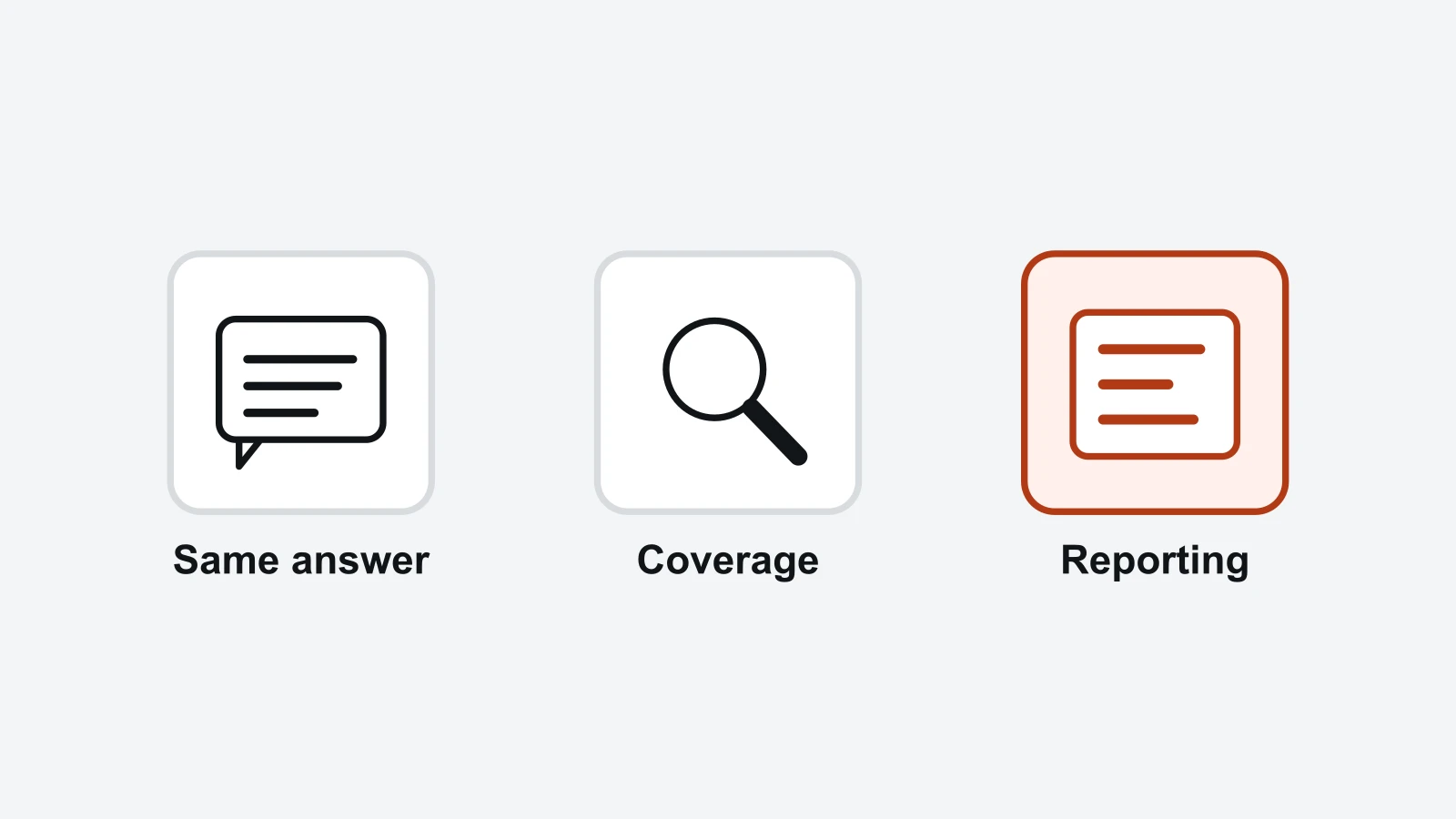
The best tool is the one whose entry plan covers your buyers' assistants, the number of prompts you need and how often, and what else you need in the same subscription. Price comparisons on their own mislead, because each vendor meters a different thing: prompts, models, credits or workspaces.
- Coverage
Which assistants and surfaces does the plan check?
- Sampling
How often are the same prompts repeated?
- Workflow
Can your team inspect the underlying answers?
Different tools meter different things. A prompt count alone is not a like-for-like price comparison.
- Assistants on the plan you will actually buy. Several tools list many assistants but put Claude, Gemini, Grok or AI Mode on a higher tier or sell them as add-ons. Check the entry plan, not the feature page.
- Prompt count and cadence together. 50 prompts checked weekly and 25 checked daily are different instruments. Answers vary from day to day, so a weekly plan needs a longer window to show the same change.
- Google rank tracking, if you need it. Compare the supported markets, devices and cadence separately from assistant monitoring.
- What happens after the report. Some tools stop at monitoring; others audit pages, generate AI content or publish to your store or CMS. Pay for the part of the workflow your team will actually use.
- Seats and workspaces. Check the number of users, projects and any per-seat or per-client cost in the plan you intend to buy.
Why one check is not a measurement
The same assistant, asked the same question on different days, named the same tool on some days and not on others in 68.5% of cases in our data. That is 267 of 390 combinations of question, assistant and top-five tool on ChatGPT, Gemini and Perplexity, from about 14 checks each on ChatGPT and Gemini and 5 on Perplexity. Only 16% named a given top tool every time.
That is why a tool that checks each prompt once and shows you the answer tells you very little. What you need is a rate over many runs across AI assistants, with competitor visibility across the same prompts beside it.
Our guide to measuring AI search visibility covers the method in full. The guide on how to track brand mentions in AI search covers doing it by hand before you buy a tool.
The five most-named AI visibility tracking tools, compared
These are the five AI visibility tools the assistants named most, each with its entry plan, who it suits and the catch, from the vendors' own pages on 26 October. Each links to our fuller comparison with RankX AI.
Semrush AI Visibility Toolkit
Semrush, part of Adobe since April 2026, sells its AI Visibility Toolkit on its own at $99 a month per domain, billed annually, with 25 custom prompts tracked daily. Its pricing page names mentions from ChatGPT, Google AI, Gemini and Perplexity.
Semrush suits teams already running their SEO on it. The catch is that rank tracking sits in the SEO suite rather than the toolkit, and Semrush's knowledge base (opens in a new tab) says the toolkit has no free trial and each additional user needs a further $99 licence. See our Semrush comparison.
Otterly.AI
Otterly.AI Lite costs $29 a month for 15 search prompts on ChatGPT, Google AI Overviews, Perplexity and Microsoft Copilot. Standard is $189 for 100 prompts. AI Mode and Gemini are add-ons from $9 a month and Claude from $29 on Lite.
A tool like Otterly.AI has the cheapest paid entry plan on this list, and ChatGPT named it in 63.5% of our answers, more than any other tool. The catch is that 15 prompts is a small sample, and adding the missing assistants raises the price quickly. See our Otterly.AI comparison.
Ahrefs Brand Radar
Ahrefs Brand Radar researches AI visibility across more than 475 million search-backed prompts run through Google AI Overviews, AI Mode, ChatGPT, Perplexity, Gemini and Copilot, with Claude available in custom prompts. Brand Radar starts at $199 a month on the pricing page, and Ahrefs Lite, at $129, includes 150 checks on AI prompts.
Ahrefs suits teams already on Ahrefs who want to track AI visibility for any brand without writing prompts first. The catch is that Lite's AI checks are a taste, and the full Brand Radar index is priced separately, from $199 a month. See our Ahrefs comparison.
Profound
Profound does not publish a self-serve price for brands, so past the free trial the price comes from a sales call. Its pricing page (opens in a new tab) offers a free seven-day Trial of 50 prompts a day on ChatGPT, Gemini and Google AI Overviews, then a custom Enterprise plan tracking up to nine answer engines, with SSO/SAML and SOC 2.
Profound suits enterprises where a security review decides the purchase. It also lists separate plans for agencies on the same page. See our Profound comparison.
Peec AI
Peec AI Starter (opens in a new tab) costs $95 a month for 50 prompts tracked daily on three models you choose, with unlimited users. Pro is $245 for 150 prompts and Advanced $495 for 350. Extra models, Perplexity among them, start at $30 a month on Starter.
Peec AI suits in-house marketing teams that want a clean monitoring layer shared across many users, and it can track AI Mode for brand answers. The catch is paying per AI model once you need more than three. See our Peec AI comparison.
Five more search visibility tools worth comparing
SE Ranking, Nightwatch, LLM Pulse, AthenaHQ and Scrunch AI were named less often in our data, in 6.9% to 33.6% of answers, but each fits a buyer the most-named tools do not. SE Ranking and Nightwatch suit teams that still need Google rankings, LLM Pulse suits small budgets, AthenaHQ has the widest model list and Scrunch AI shapes content for AI agents.
SE Ranking
SE Ranking Core costs $129 a month and tracks 100 prompts daily, alongside a full SEO suite with rank tracking, site audits and keyword research. Its AI visibility tracker lists ChatGPT, Gemini, AI Mode and AI Overviews. A 14-day trial allows 20 AI prompts a day.
SE Ranking suits teams that want AI visibility tracking and classic SEO in one subscription at a mid-market price. The catch is one manager seat on Core.
Scrunch AI
Scrunch AI starts at $250 a month on its Core plan, with 125 prompts, five user licences and site audits, tracking ChatGPT, Perplexity, Google AI Overviews and Microsoft Copilot. Its Agent Experience Platform, a way of serving content optimized for AI agents, is custom priced.
Scrunch AI suits larger brands that want to change how AI agents read their site, not only measure the result. The catch at Core is the price of entry and four assistants; a seven-day trial is available.
LLM Pulse
LLM Pulse starts at 49 euros a month for 50 prompts tracked weekly across ChatGPT, Perplexity, Gemini, AI Mode and AI Overviews. Extra models start at about $10 a month each, and there is a 14-day trial.
LLM Pulse suits European teams on a budget who can live with weekly data. The catch is that weekly checks need longer to show change, given how much answers vary from one day to the next.
Nightwatch
Nightwatch is a rank tracker that added AI visibility. Its entry plan costs 79 euros a month billed yearly for 500 keywords and 50 AI prompts across ChatGPT, Claude, Gemini and Perplexity, with unlimited seats and a 14-day trial that needs no card.
Nightwatch suits teams whose main job is still Google rankings and who want AI visibility beside them. Google AI Overviews and Copilot are not on its AI platform list.
AthenaHQ
AthenaHQ has the widest model list here and the widest price gap: a free plan with 300 credits on five models, then Starter at $295 a month with 3,600 credits. Starter covers 11 models, including Claude, Grok, Copilot, AI Mode, DeepSeek, Meta AI and Mistral, and adds a content optimization agent.
AthenaHQ suits teams that want the widest model coverage on a self-serve plan. Its credit model makes the cost of a prompt set depend on how many models it runs on and how often.
How much do AI visibility tools cost?
AI visibility tools cost from nothing to custom enterprise pricing. On 26 October the paid entry plans on this list ran from $29 a month (Otterly.AI Lite) to $295 (AthenaHQ Starter), with Profound priced on request.
The entry price is rarely the real price. Add the models you need, the prompt count your panel needs and any extra seats, then compare the monthly total.
Test an AI visibility monitoring tool on your catalogue before buying
Give each candidate the same small task: one known product, one realistic buying question, one market and one observation period. Inspect whether the answer names the product, names your store and links to your store. A matching product offered by another merchant is not evidence that your shop won the visit.
Record what the actual plan and installation can show, then choose who acts on it and how. A Shopify embedded app, a WooCommerce connection and a separate web app account can have different access and billing.
Keep unsupported features marked unavailable, and skip a subscription when nobody can act on its findings. A tracker earns its cost only when its AI visibility reports lead to a change. Next, review the merchant evidence or understand measurement limits.
Questions about AI Visibility & Analytics
What is an AI visibility tool?
An AI visibility tool asks AI assistants such as ChatGPT, Gemini and Perplexity a fixed set of questions on a schedule and records whether your brand is named, how it is described and which websites are cited. Over time it turns answers that change from day to day into a rate you can track against competitors.
Which AI visibility tool is cheapest?
On 26 October 2026 the cheapest paid entry plan on this list was Otterly.AI Lite at $29 a month for 15 prompts, and AthenaHQ offered a free plan. The cheapest useful option is the one that covers the assistants and prompt count your task needs, including any add-on models. Prices change, so check the vendor's own page before buying.
Do I need an AI visibility tool if I already pay for Semrush or Ahrefs?
It depends on the job. Semrush's AI Visibility Toolkit costs $99 a month per domain billed annually and covers ChatGPT, Google AI, Gemini and Perplexity, while Ahrefs Lite includes 150 checks on AI prompts with Brand Radar priced separately. RankX AI tracks ChatGPT, Gemini, Claude and Perplexity with AI Overviews and Google rankings in the web app from $49 a month, and its Shopify app adds AI shopping checks and product fixes, with a free plan.
Which AI visibility tools track Claude and Grok?
On 26 October 2026 Nightwatch listed Claude on every plan, AthenaHQ listed Claude and Grok on Starter, and Otterly.AI sold Claude as an add-on. RankX AI tracks Claude alongside ChatGPT, Gemini and Perplexity. Check the exact plan, because several vendors keep these models on higher tiers.
How often should AI visibility be checked?
Choose a repeatable cadence the plan supports and someone can review. Keep prompts, assistants and the comparison window stable. Calculate the workload and required credits before scheduling; do not infer daily availability from an old article.
Can an AI visibility tool get my brand recommended by AI?
No tool can make an assistant name you. A tracker shows where you are named, which competitors are named instead and which pages the assistant cited. The work that moves the rate is being included on the pages those assistants retrieve and publishing pages worth citing, which is the job of RankX AI's Content Studio.
Sources
- RankX AI tracking data for rankxai.com, read 26 September 2026. 26 buying-stage prompts that name no product (six that do were excluded), 1,165 answers between 28 August and 25 September 2026 from ChatGPT, Gemini, Perplexity, Claude and Grok. Naming rates are answers naming a company or tool divided by all answers. 267 of 390 prompt, assistant and tool combinations on ChatGPT, Gemini and Perplexity named a top-five tool on some days only. Method: RankX AI methodology page Checked 2026-10-26.
- Semrush, AI Visibility Toolkit pricing: $99 a month per domain billed annually, 25 custom prompts tracked daily, mentions from ChatGPT, Google AI, Gemini and Perplexity (opens in a new tab) Checked 2026-10-26.
- Semrush knowledge base, AI Visibility Toolkit: no free trial; a further $99 licence for each subuser (opens in a new tab) Checked 2026-10-26.
- Adobe, Adobe completes Semrush acquisition, 28 April 2026 (opens in a new tab) Checked 2026-10-26.
- Otterly.AI pricing: Lite $29 a month for 15 prompts, Standard $189 for 100; Google AI Overviews, ChatGPT, Perplexity and Microsoft Copilot included; Claude, Google AI Mode and Gemini as add-ons (opens in a new tab) Checked 2026-10-26.
- Ahrefs pricing: Lite $129 a month with 150 checks on AI prompts; Brand Radar from $199 a month (opens in a new tab) Checked 2026-10-26.
- Ahrefs Brand Radar: more than 475 million search-backed prompts run through AI Overviews, AI Mode, ChatGPT, Perplexity, Gemini and Copilot; Claude in custom prompts (opens in a new tab) Checked 2026-10-26.
- Profound pricing: free Trial of 50 prompts daily for 7 days on ChatGPT, Gemini and Google AI Overviews; custom Enterprise with up to 9 answer engines, SSO/SAML and SOC 2 (opens in a new tab) Checked 2026-10-26.
- Peec AI pricing, read from a US location: Starter $95, Pro $245, Advanced $495 a month; three models of your choice; unlimited users; extra models from $30 a month (opens in a new tab) Checked 2026-10-26.
- SE Ranking subscription plans: Core $129 a month, 100 prompts tracked daily, one manager seat, 14-day trial with 20 AI prompts a day (opens in a new tab) Checked 2026-10-26.
- SE Ranking AI visibility tracker: ChatGPT, Gemini, AI Mode and AI Overviews (opens in a new tab) Checked 2026-10-26.
- Scrunch pricing: Core $250 a month, 125 prompts, five user licences, ChatGPT, Perplexity, Google AI Overviews and Copilot; 7-day trial; Agent Experience Platform custom (opens in a new tab) Checked 2026-10-26.
- LLM Pulse pricing: from 49 euros a month with weekly tracking, 50 prompts, five AI models (ChatGPT, Perplexity, Gemini, Google AI Mode, AI Overviews), extra models from about $10 a month, 14-day trial (opens in a new tab) Checked 2026-10-26.
- Nightwatch pricing: 79 euros a month billed yearly for 500 keywords and 50 AI prompts; ChatGPT, Claude, Gemini and Perplexity; unlimited seats; 14-day trial without a card (opens in a new tab) Checked 2026-10-26.
- AthenaHQ plans and pricing: free plan with 300 credits on five models; Starter $295 a month with 3,600 credits across 11 models; content optimization agent (opens in a new tab) Checked 2026-10-26.
- OpenAI: shopping with ChatGPT Search (opens in a new tab) Checked 2026-10-26.
Asif Syed is the founder and CEO of RankX AI, the AI search visibility platform. He builds the product and writes here about GEO, AI search measurement and WordPress.
CoversThis article covers the AI Visibility & Analytics topic, the AI Visibility feature and the AI Overview Checker tool.
Terms usedAI Share of Voice, AI Mention, Citation Rate, AI Citation, Grounding and Answer Engine.
Read this page asMarkdown: /blog/best-ai-visibility-tools.md.
All articlesEverything RankX AI publishes is listed on the blog index.
Ask an assistantAsk ChatGPT (opens in a new tab), Ask Claude (opens in a new tab) or Ask Perplexity (opens in a new tab).
Preferred sourceIf Google is your front door, you can add RankX AI as a preferred source (opens in a new tab), which asks your own results to surface more of what we publish.