Perplexity SEO: Why Google Rankings Matter
Perplexity cites Google's top 10 more than any other assistant, and less than the guides claim. What is measured, what is not, and which crawler to allow.
 Published Last updated 13 minute read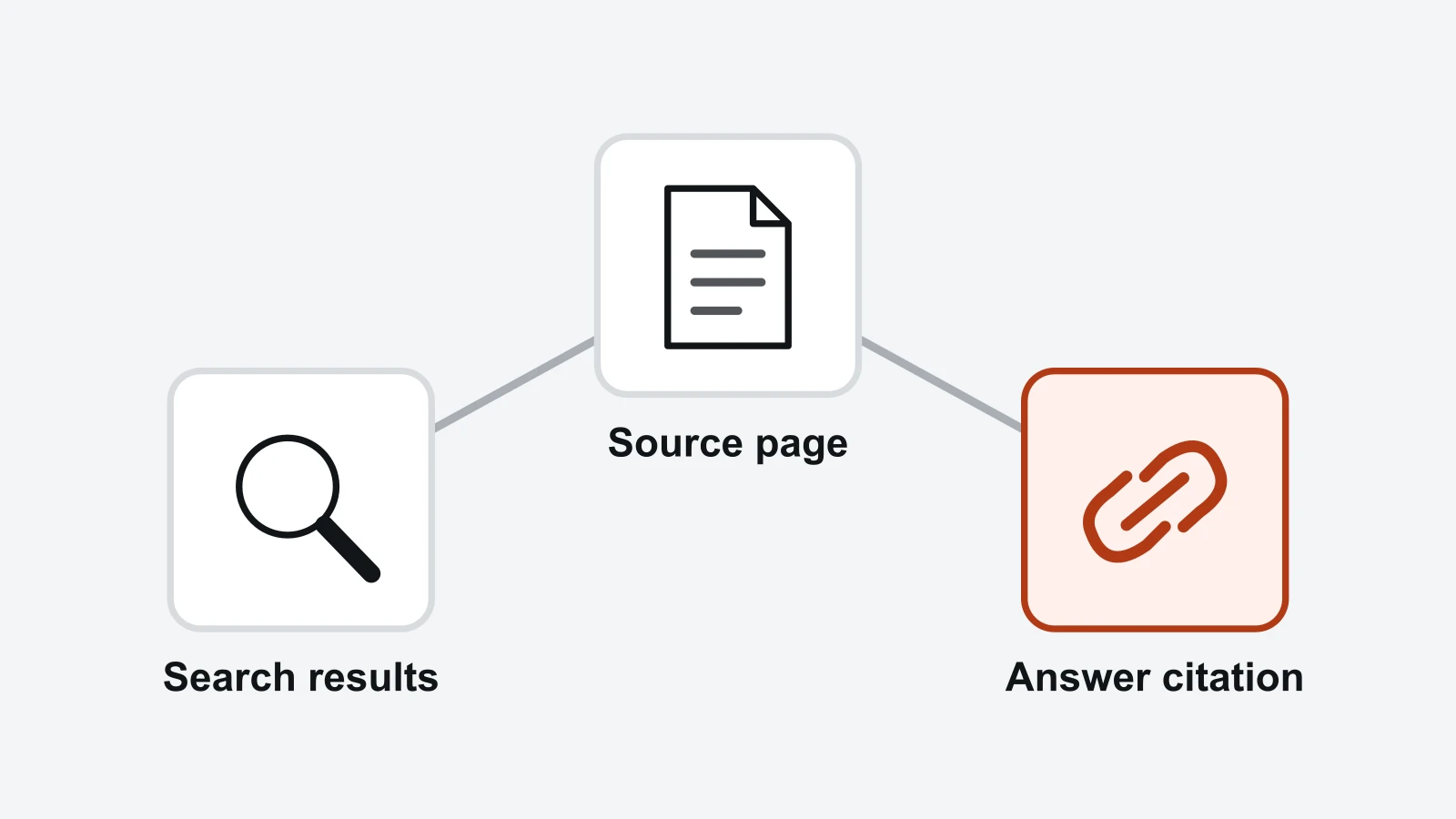
On this page 11 sections
- What is Perplexity SEO?
- Does ranking in Google get you cited in Perplexity?
- What actually predicts Perplexity visibility?
- The GEO result nobody on this topic quotes
- Why the ChatGPT half of that study is being misread
- Reddit and Perplexity: check the denominator, then check the date
- Which Perplexity crawler do you have to allow?
- What carries over from traditional SEO, and what does not
- How to work on Perplexity, in order
- How RankX AI tracks Perplexity
- Make a product comparison useful enough to check
Short answer: Perplexity SEO means improving useful, accessible pages and checking whether Perplexity cites them for relevant questions. Verify crawler access, support product comparisons with real facts and inspect the actual source destination. Published correlations describe their own samples; they do not establish a ranking formula or prove that links will cause your store to be cited.
What is Perplexity SEO?
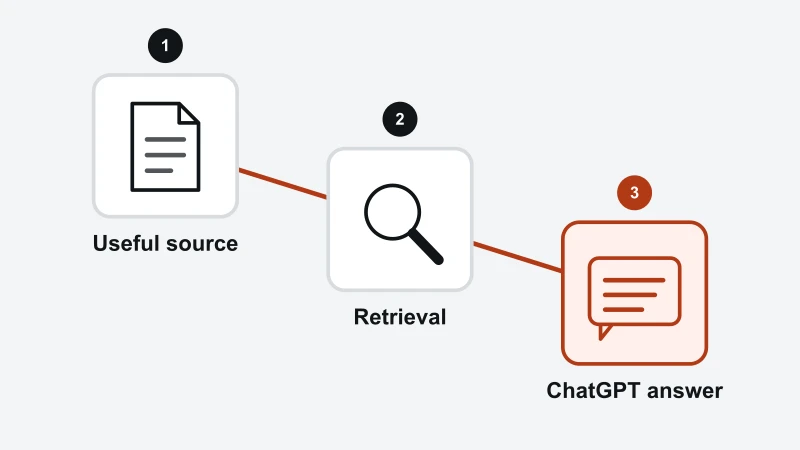
Perplexity SEO is the practice of getting your pages retrieved and cited in Perplexity's answers. Perplexity AI is an answer engine rather than a search engine: it runs a search, reads what it finds, and writes a conversational, sourced response with numbered citations instead of returning a list of links.
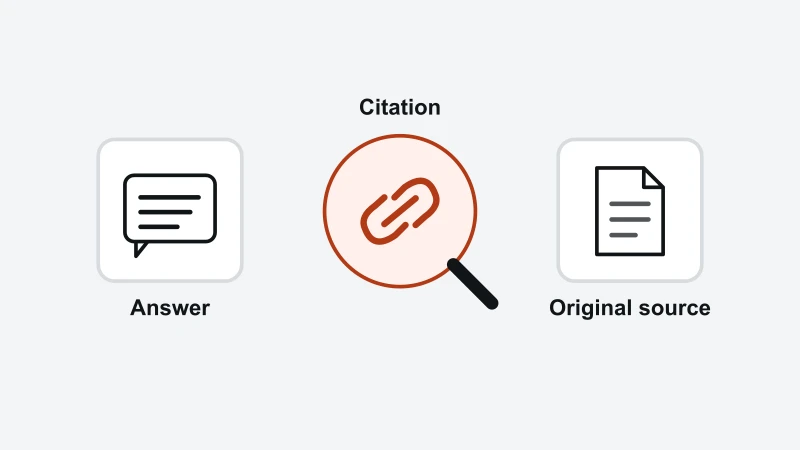
The work is therefore aimed at being one of those citations. People call it ranking in Perplexity, but there is no ranked list to enter: the unit of visibility is a citation inside an answer, and a page is either in one or it is not.
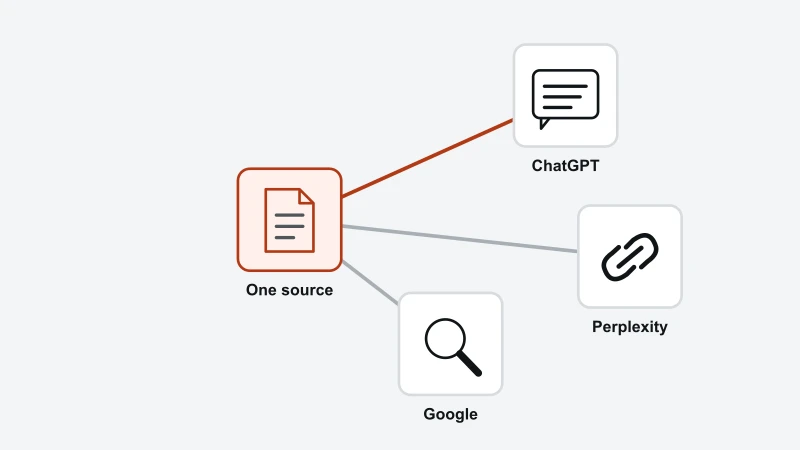
One thing separates Perplexity from the other AI platforms and it is measurable. Perplexity searches the live web on every query and leans on the same signals that decide ordinary search results, so the SEO a team already does carries over further here than anywhere else in AI search. That is a correlation rather than a lever, and the rest of this article is about how far it actually goes.
Does ranking in Google get you cited in Perplexity?
Ranking in Google helps on Perplexity more than on any other assistant, and it is still a minority of citations. Ahrefs searched 15,000 long-tail queries (opens in a new tab) in Google and Bing, then asked the same questions of four AI assistants, and compared the cited URLs against the ranked ones. Perplexity was the outlier.
- Google ranking
One observable search signal.
- Perplexity source
A page selected in a particular answer.
- Evidence
Compare the actual query and capture.
Do not turn a correlation into a rule that every ranked page will be cited.
Assistant | Cited URLs also in Google's top 10 | Cited URLs also in Bing's top 10 |
|---|---|---|
Perplexity | 28.6 per cent | 14.0 per cent |
Gemini | 8.6 per cent | 3.3 per cent |
Copilot | 8.2 per cent | 16.6 per cent |
ChatGPT (in-text) | 8.0 per cent | 8.1 per cent |
All four, averaged | 11.9 per cent | 10.0 per cent |
The second column is the part almost nobody quotes and it matters for reading the first. Perplexity leads on Google by a wide margin and sits second on Bing, while Copilot is the highest of the four against Bing at 16.6 per cent, which fits a Microsoft product built on Bing. Gemini is the lowest against Bing at 3.3 per cent, which fits a Google product just as neatly. So these are not assistants overlapping with search engines in general. Each one leans toward the index behind it.
Read the size of it honestly, though. At 28.6 per cent, roughly seven in ten pages Perplexity cites do not rank in Google's top 10 for the query that produced them. A top-10 position raises your chances by a factor of about three against the other assistants and still leaves most citation slots going to pages that did not earn one.
Note the date before you act on it. Ahrefs collected this in early July 2025 and published on 11 August 2025, which makes it thirteen months old, and Perplexity runs its own index and its own rerankers, so its retrieval changes independently and continuously. It is the best per-platform measurement in public and it is not fresh. Nobody has published a 2026 replication that separates the assistants this way, which is worth knowing when a page quotes a newer-sounding figure.
What actually predicts Perplexity visibility?
Referring domains predict Perplexity visibility, modestly and significantly. The clearest evidence is independent rather than a vendor report, with one caveat that belongs before the numbers: it is a single-author arXiv preprint drawn from M.Tech thesis research at IIT Patna, and it has not been peer reviewed. Amit Prakash Sharma tested 112 startups drawn at random from the top 500 of the 2025 Product Hunt leaderboard, across 2,240 queries run through APIs between 15 and 20 December 2025, and published The Discovery Gap (opens in a new tab) in January 2026.
Seven signals reached significance for Perplexity discovery. None reached significance for the other model tested. The strongest were the ones an SEO team already works on.
Signal | Correlation with Perplexity discovery | p |
|---|---|---|
Referring domains | +0.319 | under 0.001 |
Product Hunt rank (lower is better) | -0.286 | 0.002 |
Dofollow ratio | +0.238 | 0.012 |
Unique subreddits, after cleaning | +0.405 | 0.001 |
Reddit mentions, after cleaning | +0.395 | 0.002 |
GEO composite score | -0.102 | 0.286, not significant |
A correlation of +0.319 is real and small. It accounts for about a tenth of the variation in whether a product got discovered, which supports building referring domains and does not support promising a client that links produce Perplexity citations. The Reddit rows come from a reduced sample of 60 products, because the author removed 52 with generic names such as Cursor, DROP and Solar after finding their mention counts were picking up unrelated threads about mouse cursors and solar panels.
Read those two rows with more caution than their size invites. Before the cleaning they were a null, at +0.052 with a p-value of 0.586, so they are a post-hoc result on a reduced sample rather than something the study set out to test. Referring domains is the row that was measured on the full 112 and survived.
The study's own limits are worth carrying with the numbers: every product came from Product Hunt, which skews to developer and productivity tools, and the sample is 112. Treat it as the best available evidence on this question rather than a settled one.
The GEO result nobody on this topic quotes
The Discovery Gap also found that a composite Generative Engine Optimization score predicted discovery on neither platform it tested. For Perplexity the correlation was -0.102 with a p-value of 0.286; for the other model, -0.108 at p = 0.256. Both are indistinguishable from no relationship. The score combined six things the GEO literature recommends: statistics on the page, citation density, technical terminology, authoritative language, structured data and content depth.
The author does not read this as proof that GEO advice is worthless, and neither should anyone quoting it. His reading is that GEO works as a multiplier on visibility a site already has, and the products in his sample mostly had none to multiply. It sits against Aggarwal and colleagues, whose 2024 paper introduced the term and reported gains of 30 to 40 per cent when testing content that was already appearing in search-augmented answers.
Both results can hold at once, and together they give a sequence rather than a contradiction. Get discoverable first through the ordinary work of earning links and being talked about, then optimise the pages that are already surfacing. A site nobody retrieves gains nothing from better-structured answers on pages nobody reaches.
One caution on the GEO score itself, stated by its author: it was built with regular expressions looking for patterns like numbers followed by percentage signs. That is a rough proxy for well-optimised content, and a finer measure might find what this one missed.
Why the ChatGPT half of that study is being misread
The Discovery Gap's headline comparison is circulating as evidence that ChatGPT visibility is random while Perplexity visibility is earnable. Check what was tested. The ChatGPT arm used gpt-4o-mini, which the paper describes as a knowledge-cutoff model representing the pure LLM case, with no web search. The Perplexity arm used sonar with web search enabled.
So the finding that web signals predicted nothing for gpt-4o-mini is close to a definition. A model that cannot see the web will not be moved by referring domains, because it never retrieves anything. The comparison measures architectures, setting a retrieving system like Perplexity against one that cannot browse, which is exactly what the author says it measures.
What it does not measure is the consumer ChatGPT product, which does search the web. The gap it reports is still real within its own terms: across 784 discovery queries per model, the retrieving one surfaced a product 65 times and the non-retrieving one 26.
This matters for anyone budgeting from that paper. Its Perplexity results stand on their own and are the ones used above. Its ChatGPT results describe a configuration most readers will never encounter, and a guide that presents them as ChatGPT SEO advice has not read the method. For what the retrieving version of ChatGPT responds to, how to rank in ChatGPT covers the measured evidence separately.
From RankX AIRead the Perplexity answer behind the metric.Ask the same buying question in Perplexity and inspect any available citations.Explore AI visibility evidenceReddit and Perplexity: check the denominator, then check the date
Reddit's share of Perplexity's citations is quoted wrongly in two different ways, and the second one will cost you more. Profound analysed 680 million citations collected between August 2024 and June 2025 across ChatGPT, Google AI Overviews and Perplexity. It reported Reddit at 6.6 per cent of Perplexity's total citations and 46.7 per cent of its top ten sources, with a note on the same page explaining that the two measure different things.
The first error is the denominator. The 46.7 per cent is Reddit's share within Perplexity's top ten sources, a much smaller pool by construction, and quoting it as a share of everything overstates Reddit's role by a factor of seven. That is the version that has spread across this subject.
The second error is the date, and it catches anyone who fixes the first. That window closed over a year ago, and this is one of the fastest-moving figures on the page.
Tinuiti, using Profound's own tracking across seven AI platforms and nine commercial categories from October 2025 to January 2026, put Reddit at about 24 per cent of all Perplexity citations by January, on the same all-citations denominator as the 6.6. Social sources together made up 31 per cent of Perplexity's January citations, and Reddit's share grew by at least 73 per cent over those four months.
So 46.7 was always the wrong denominator and 6.6 is now the wrong year. Reddit is a serious channel for Perplexity specifically, on the order of one citation in four rather than one in fifteen, and it is worth budgeting as one.
The same measurement makes the platform split concrete, which is the more useful finding. Reddit ran at close to 7 per cent of ChatGPT's citations and just over 3 per cent of Gemini's in that January reading, against Perplexity's 24.
A source carrying a quarter of one assistant's citations and a fifteenth of another's is the clearest argument on this page for working the platforms separately. Both AI models are reaching for what they treat as a trusted source and they disagree about which sources those are. How LLMs choose what to cite goes into the selection mechanics.
The general test survives both errors and is worth applying to any AI citation statistic you are shown: ask what the denominator was, then ask when the data was collected. Share-of-top-ten and share-of-everything get quoted in the same sentence across this subject, and figures from 2025 are quoted as current across most of it.
Which Perplexity crawler do you have to allow?
If Perplexity search access fits your policy, check the documented PerplexityBot rule and actual responses. Its user-triggered fetcher has a different purpose. Verify legitimate requests against current published addresses before changing an edge rule; an allowed response is access evidence, not proof of index selection or a citation.
A second agent behaves differently and this is where sites get caught out. Perplexity-User fetches a page because a person asked a question that needs it, and the documentation states (opens in a new tab) that since a user requested the fetch, this fetcher generally ignores robots.txt rules. A robots directive is therefore a request to the indexer, not an access control on the platform.
Verify by IP, not by user agent
Perplexity publishes IP ranges for both agents, at perplexity.com/perplexitybot.json and perplexity.com/perplexity-user.json. Checking a request against those is the only reliable identification, because a user-agent string is a claim anyone can make, and traffic impersonating assistant crawlers is common enough that log analysis without verification will mislead you.
There is a live dispute worth knowing about before you rely on robots.txt here. Cloudflare published research on 4 August 2025 (opens in a new tab) describing test domains that disallowed all automated access, which Perplexity then answered questions about in detail.
Cloudflare reported a declared crawler at 20 to 25 million daily requests and an undeclared one at 3 to 6 million. It said Perplexity was repeatedly modifying its user agent and changing source ASNs, then de-listed the company as a verified bot and added blocking heuristics to its managed rules.
Perplexity rejected the analysis, and its counter-argument rests on the same distinction this section is built on. It said the disputed volume came from BrowserBase, a third-party cloud browser it uses sparingly, accounting for fewer than 45,000 of its daily requests against the 3 to 6 million attributed to it.
Its wider argument is that a fetch made because a person asked a question is an assistant acting for a user, not a crawler harvesting a site. Whichever side you find more convincing, the disagreement is about where the line between those two agents falls, not about whether the fetch happens.
Two practical consequences, whichever account you find more convincing. If your site sits behind Cloudflare with AI-crawler managed rules on, you may be blocking Perplexity without having chosen to, so check before concluding your content is being ignored. And if you actively want to keep content out, robots.txt alone will not do it, because only one of the two agents is documented as honouring it.
What carries over from traditional SEO, and what does not
Most of a traditional SEO programme carries over to Perplexity, and unlike ChatGPT the alignment is measurable rather than assumed. Perplexity AI runs a live web search behind every answer, so technical SEO, page-level relevance and the referring domains that lift a page in traditional search all act on the same retrieval step. The work is a reordering of existing effort rather than a separate discipline.
Traditional SEO work | How much carries over to Perplexity |
|---|---|
Crawlability and server-rendered HTML | Fully. PerplexityBot has to fetch and parse the page before anything else can happen |
Referring domains | Fully, and it is the strongest measured predictor at r = +0.319 |
Ranking in Google's top 10 | Partly. 28.6 per cent of cited URLs also rank there, so it improves the odds |
Keyword-led page targeting | Partly. People ask in natural language, so a page has to answer the question rather than match the phrase |
Title and meta description tuning | Little. There is no result listing to win, only a passage to be retrieved |
Click-through-rate work | None. An answer engine gives the reader nothing to click |
What does not transfer is everything built around a results listing. Perplexity returns written prose with numbered sources, so there is no snippet to tune and no position to defend, and a page earns its place by being a passage worth quoting rather than a listing worth clicking. Traditional search engine metrics like click-through rate have no equivalent to report.
Query shape is the other real difference. People type short phrases into a search box and put whole questions to an AI search engine, so a page built for a three-word keyword often answers none of the question actually asked. Writing sections that answer complete questions serves both surfaces at once, which is the part of an SEO strategy worth changing first.
How to work on Perplexity, in order
Start with a useful public page and a confirmed access or information gap. For a store, that may be a missing compatibility fact or an inaccessible comparison. Earn relevant references by publishing something useful, rather than buying links to chase a study correlation. Then check the same question and source context again.
- Access
Verify the relevant crawler can reach the page.
- Content
Answer the specific question with supportable facts.
- Observe
Inspect citations in repeated relevant answers.
Use the answer capture to distinguish an implementation change from a visibility result.
- Audit your crawler access first. Confirm PerplexityBot can reach you, in robots.txt and at the CDN, and check the CDN separately: a managed AI-crawler rule can block what your robots.txt allows.
- Earn referring domains from relevant sites. This is the strongest measured predictor, at r = +0.319, and the one most guides skip because it is slow.
- Participate where your buyers already discuss the problem. Reddit carried about a quarter of Perplexity's citations in January 2026, far more than it carries on ChatGPT or Gemini, so it is worth real effort on this platform specifically.
- Answer the question in the first sentence of each section, so a retrieved passage stands on its own without the paragraph above it.
- Name the entity rather than using pronouns in each section, because retrieval lifts chunks without their surrounding context.
- Serve it in the HTML. Content that appears only after JavaScript runs is content the retrieval layer may never see.
Measure it as a rate over a fixed set of prompts, not as individual answers. Assistants give different responses to the same question on different runs, so one answer naming you is not visibility and one omitting you is not a loss. Watch the proportion across a set you do not change, and segment old prompts from new ones when you expand it, or the denominator will move under you.
The wider AI SEO picture, platform by platform and including which assistant to work on first for your audience, is in the platform-by-platform pillar.
How RankX AI tracks Perplexity
RankX AI reports brand visibility in Perplexity on its own line rather than folding it into a blended score, which matters on a platform whose source pool overlaps the others as little as this one's does. You can see what Perplexity says about you beside ChatGPT, Gemini, Claude, Grok and Microsoft Copilot, and see plans for what tracking a set costs.
Make a product comparison useful enough to check
Choose a comparison your team can support with real product information, such as dimensions, materials, care or compatibility. State where each fact comes from and which buyer it matters to. Do not invent a laboratory test, customer review or competitor defect to make the guide sound authoritative.
Ask the same buying question in Perplexity and inspect any available citations. A citation may point to a guide, manufacturer or retailer, each with a different role. Check whether the destination is your shop and whether its linked products are still available. Improve the missing useful fact or onward link, then repeat the same question; a correlation study cannot guarantee your page will be cited.
Next, understand citation accuracy or compare assistant-specific measurements.
Questions about AI Platform Guides
Does ranking in Google help you get cited in Perplexity?
Google ranking and Perplexity citations can overlap, but the cited studies do not isolate the effect of a Google position. Keep useful SEO work, check the actual source and question, and measure Perplexity observations separately. A top-ten result is neither a citation guarantee nor a universal eligibility requirement.
Which Perplexity crawler do you need to allow?
PerplexityBot, which is the one that builds the index behind Perplexity's answers and the one that respects robots.txt. A second agent, Perplexity-User, fetches a page because a person asked a question about it, and Perplexity's documentation states that because a user requested the fetch it generally ignores robots.txt rules. Blocking PerplexityBot removes you from the index. Blocking Perplexity-User in robots.txt mostly does not work as written.
Does GEO optimisation improve Perplexity visibility?
There is no universal GEO score that establishes whether a store will be cited. The study discussed here tested a particular composite score on a limited sample of startups. Its result cannot show that every practical content or access improvement has no value. Fix a confirmed reader or retrieval problem and inspect comparable observations afterward.
How much of Perplexity's citations come from Reddit?
About 24 per cent of all its citations as of January 2026, and it has moved fast. Tinuiti, using Profound's tracking across seven AI platforms from October 2025 to January 2026, put Reddit at roughly 24 per cent of all Perplexity citations, up at least 73 per cent over those four months, against close to 7 per cent on ChatGPT and just over 3 per cent on Gemini. An older pair of figures from Profound's 680 million citation dataset, covering August 2024 to June 2025, gave 6.6 per cent of total citations and 46.7 per cent of top ten sources. The 46.7 is routinely misquoted as a share of all citations, which it has never been, and the 6.6 is now a year out of date.
Is Perplexity SEO different from ChatGPT SEO?
Yes, and the source pools barely overlap. Perplexity runs its own index and rerankers over live web results, so pages that rank and pages with referring domains are more likely to be found. ChatGPT reaches its own search index instead, and its citations show far weaker alignment with Google positions. Work that helps on both is the shared floor: server-rendered content, answers at the top of sections, and crawler access. Everything past that is per-platform.
Can you block Perplexity from using your content?
Partly, and not reliably through robots.txt alone. PerplexityBot honours robots.txt, so disallowing it should keep you out of the index. Perplexity-User does not honour it for user-triggered fetches. Cloudflare published research in August 2025 saying it observed undeclared crawling of domains that had disallowed all automated access, and de-listed Perplexity as a verified bot; Perplexity disputed the finding. If access control matters to you, verify traffic against Perplexity's published IP ranges rather than trusting the user-agent string.
Sources
- Ahrefs (Louise Linehan, with Xibeijia Guan), AI search overlap: 15,000 long-tail queries searched in Google and Bing and asked of ChatGPT, Gemini, Copilot and Perplexity. Data collected early July 2025, published 11 August 2025. Share of AI-cited URLs also ranking in Google's top 10: Perplexity 28.6 per cent, Gemini 8.6, Copilot 8.2, ChatGPT in-text citations 8.0, ChatGPT references 6.1, average 11.9 (headlined as 12). Share also ranking in Bing's top 10: Copilot 16.6, Perplexity 14.0, ChatGPT 8.1 both measures, Gemini 3.3, average 10.02. The '33 per cent' figure circulating for Perplexity is a misquote of 28.6 (opens in a new tab) Checked 2026-09-04.
- Amit Prakash Sharma (IIT Patna), The Discovery Gap: How Product Hunt Startups Vanish in LLM Organic Discovery Queries, arXiv 2601.00912, submitted 1 January 2026. 112 startups randomly selected from the top 500 of the 2025 Product Hunt leaderboard (minimum 200 upvotes, working site, English), 2,240 queries (3 direct plus 7 discovery per product per model), run via API 15 to 20 December 2025 at temperature 0.7. Models: ChatGPT gpt-4o-mini, described by the author as a knowledge-cutoff model with no web search representing 'the pure LLM case', and Perplexity sonar with web search. Direct recognition 99.4 per cent (334/336) ChatGPT and 94.3 (317/336) Perplexity; discovery 3.32 (26/784) and 8.29 (65/784); products ever discovered 6 and 31. Perplexity significant correlations (n=112): referring domains +0.319 p<0.001, POTD rank -0.286 p=0.002, dofollow ratio +0.238 p=0.012, PH upvotes +0.225 p=0.017, PH rating +0.187 p=0.048; cleaned Reddit mentions +0.395 p=0.002 and unique subreddits +0.405 p=0.001, both n=60 after removing 52 generic-named products (46 per cent of the sample). GEO composite null: ChatGPT r=-0.108 p=0.256, Perplexity r=-0.102 p=0.286. ChatGPT had zero significant correlations, an artefact of testing a non-retrieving model rather than a fact about the ChatGPT product. Author's stated limits: Product Hunt skew, two LLMs only, regex-based GEO score, reduced power after Reddit cleaning (opens in a new tab) Checked 2026-09-04.
- Aggarwal, Murahari, Rajpurohit, Narasimhan and Deshpande, GEO: Generative Engine Optimization, arXiv 2311.09735 (2024). The paper that introduced the term, tested nine content optimisation strategies across 10,000 queries and reported visibility gains of 30 to 40 per cent, on content that was already appearing in search-augmented responses. The counterweight the Discovery Gap author himself names (opens in a new tab) Checked 2026-09-04.
- Profound, AI platform citation patterns: 680 million citations across ChatGPT, Google AI Overviews and Perplexity, collected August 2024 to June 2025, published 5 June 2025 and updated August 2025. Perplexity: Reddit 6.6 per cent of total citations and 46.7 per cent of its top ten sources; YouTube 2.0 per cent of total. ChatGPT: Wikipedia 7.8 per cent of total, 47.9 per cent of top ten sources. Google AI Overviews: Reddit 21.0 and YouTube 18.8 per cent of top ten. Overall .com over 80 per cent of citations, .org 11.29. The page distinguishes overall citation volume from top source share. Superseded on the total-citations measure by the Tinuiti report below (opens in a new tab) Checked 2026-09-04.
- Tinuiti, AI Citations Trends Report Q1 2026, produced with Profound's tracking, data window October 2025 to January 2026 across seven AI platforms and nine commercial categories (apparel, beauty, electronics, food and beverage, home and garden, manufacturing, OTC health, technology, transportation and logistics), reported 26 February 2026 by MediaPost. Reddit about 24 per cent of all Perplexity citations in January, on the same all-citations denominator as Profound's 6.6; social sources 31 per cent of Perplexity's January citations; Reddit close to 7 per cent of ChatGPT's citations and just over 3 per cent of Gemini's; Reddit citation share up at least 73 per cent from October to January (opens in a new tab) Checked 2026-09-04.
- Computerworld, AI crawlers vs web defenses: the Cloudflare and Perplexity dispute, published 5 August 2025, carrying Perplexity's rebuttal. Perplexity called Cloudflare's analysis a publicity stunt or a basic traffic analysis failure, said the disputed volume came from BrowserBase (a third-party cloud browser) at fewer than 45,000 of its daily requests against the 3 to 6 million Cloudflare attributed to stealth crawling, and argued that a fetch triggered by a user question is an assistant acting for a person rather than a crawler (opens in a new tab) Checked 2026-09-04.
- arXiv metadata for 2601.00912, comments field: "20 pages, 7 figures. Based on M.Tech thesis research, Indian Institute of Technology Patna, 2025". Single author, cs.IR and cs.AI, version 1 only, no journal reference, arXiv DOI 10.48550/arXiv.2601.00912. Not peer reviewed. The paper also reports that the uncleaned Reddit correlation was a null (+0.052, p = 0.586), so the two cleaned Reddit rows are a post-hoc subgroup result (opens in a new tab) Checked 2026-09-04.
- Perplexity, bot documentation, fetched 4 September 2026. PerplexityBot surfaces and links websites in search results, is not used for AI model training, respects robots.txt, IP ranges published at perplexity.com/perplexitybot.json. Perplexity-User accesses pages when users ask questions; the documentation's own wording is 'Since a user requested the fetch, this fetcher generally ignores robots.txt rules', IP ranges at perplexity.com/perplexity-user.json (opens in a new tab) Checked 2026-09-04.
- Cloudflare, Perplexity is using stealth, undeclared crawlers to evade website no-crawl directives, published 4 August 2025. Method: new test domains with robots.txt prohibiting all automated access, then queried Perplexity, which returned detailed content about them. Reported a declared crawler at 20 to 25 million daily requests and an undeclared one at 3 to 6 million across tens of thousands of domains, described Perplexity as 'repeatedly modifying their user agent and changing their source ASNs to hide their crawling activity' and as 'ignoring, or sometimes failing to even fetch, robots.txt files', de-listed Perplexity as a verified bot and added signature matches to its AI crawler blocking managed rule (opens in a new tab) Checked 2026-09-04.
- 5W Public Relations, The state of AI citations 2026. Its methodology section describes the report as a synthesis of six other datasets published between August 2024 and April 2026 (Profound 680M citations, Goodie 5.7M then 58.6M, Surfer 46M, Semrush 230k prompts, Peec AI 30M, and the same Ahrefs 15,000-query study), states that 5W is 'conducting parallel proprietary research' with results to follow, and publishes no primary method for its headline claim that the overlap between top Google rankings and AI-cited sources fell from 70 per cent to under 20 per cent (opens in a new tab) Checked 2026-09-04.
- OpenAI: shopping with ChatGPT Search (opens in a new tab) Checked 20 Oct 2026.
- Perplexity: documented crawlers and request verification (opens in a new tab) Checked 2026-10-21.
Asif Syed is the founder and CEO of RankX AI, the AI search visibility platform. He builds the product and writes here about GEO, AI search measurement and WordPress.
CoversThis article covers the AI Platform Guides topic, the AI Visibility feature and the AI Readiness Score tool.
Terms usedPerplexityBot, AI Citation, AI Crawler, Robots.txt, Referring Domain, Citation Rate, AI Mention, Grounding and RAG (Retrieval-Augmented Generation).
Read this page asMarkdown: /blog/perplexity-seo.md.
All articlesEverything RankX AI publishes is listed on the blog index.
Ask an assistantAsk ChatGPT (opens in a new tab), Ask Claude (opens in a new tab) or Ask Perplexity (opens in a new tab).
Preferred sourceIf Google is your front door, you can add RankX AI as a preferred source (opens in a new tab), which asks your own results to surface more of what we publish.